Arborist Tree Health and Hazard Checks in Raymore, MO
Worried about a tree over the house, the drive or the fence? We walk it from the roots to the crown and tell you plainly whether it needs pruning, watching or taking down.
Free, no-obligation estimates. We answer the phone or call back the same working day.
Arborist Tree Checks in Raymore
An arborist check is a slow walk around your tree, from the roots to the top of the crown, to judge how healthy it is and whether any part of it is likely to fail.
It is the visit to ask for when a tree stands near something you care about and something about it bothers you: a limb that never leafed out this spring, mushrooms at the base, a lean you do not remember. In the trade it is called a "tree risk assessment", which means weighing how likely the tree or one of its limbs is to fail against what it would land on if it did.
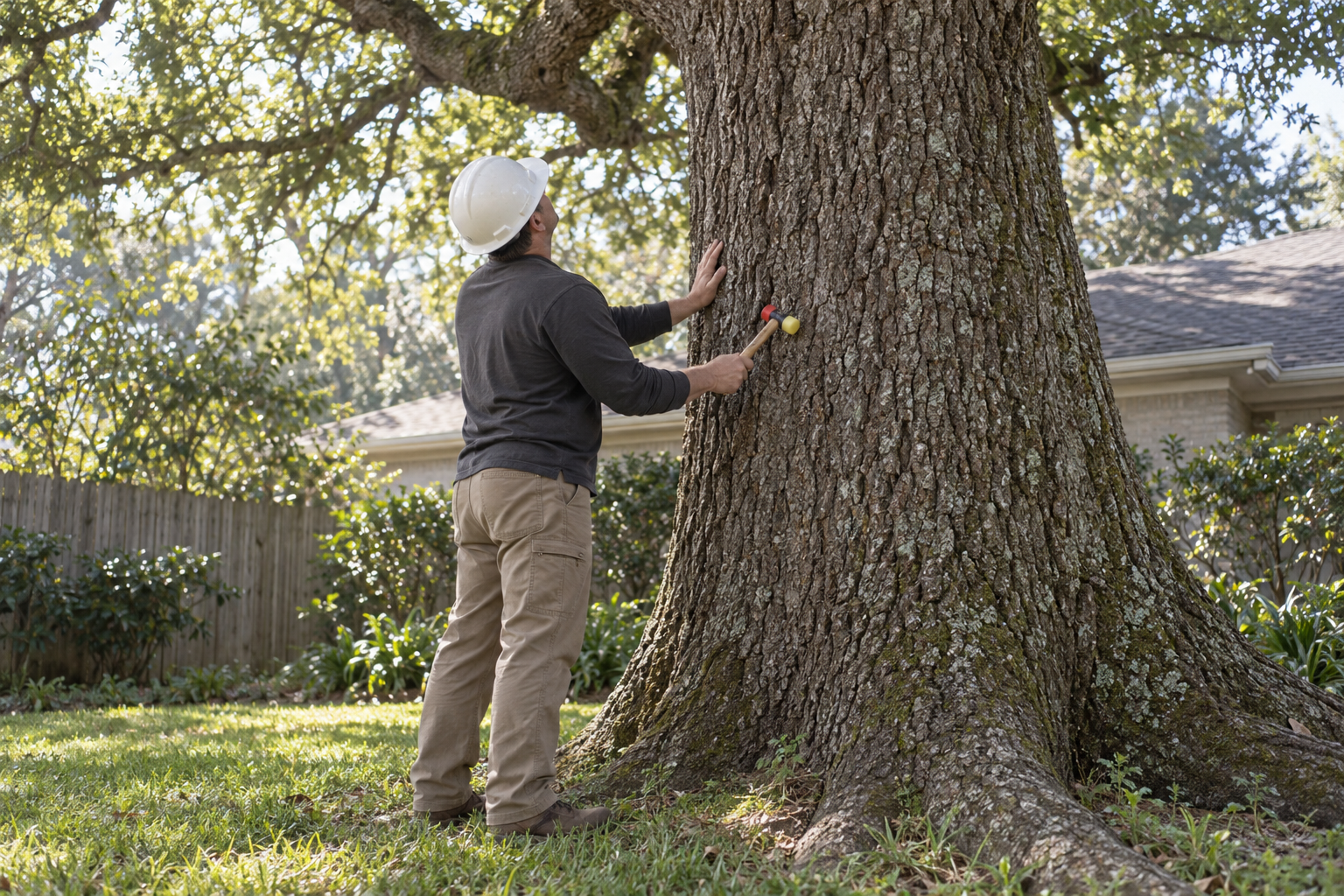
We look, we listen to the trunk, and we tell you what we see in plain words while we are standing in your yard.
The check covers the root zone, the trunk, the main unions and the crown, and then what the tree would hit if it failed.
Root zone and soilCut or buried roots, soil lifting at the base, and ground that stays soft and wet around the trunk.
Trunk decay and cavitiesHollow spots, open cavities and bark that has come away, sounded with a mallet for the dull note of rot.
Cracks and weak unionsSplits in the trunk and tight forks where two main stems squeeze bark between them.
Dead limbs in the crownBranches with no leaves or no bark, and any broken "hanger" caught up in the canopy.
Targets under the treeThe roof, the drive, the fence, the play set and the street: what a falling limb would hit.
Signs a Tree Is in Trouble
Dead limbs, fungus at the base, cracks, a new lean and lightning damage are the signs that a tree needs a closer look.
Dead limbs. Bare branches in summer, or a broken limb hanging in the crown, can drop without warning.
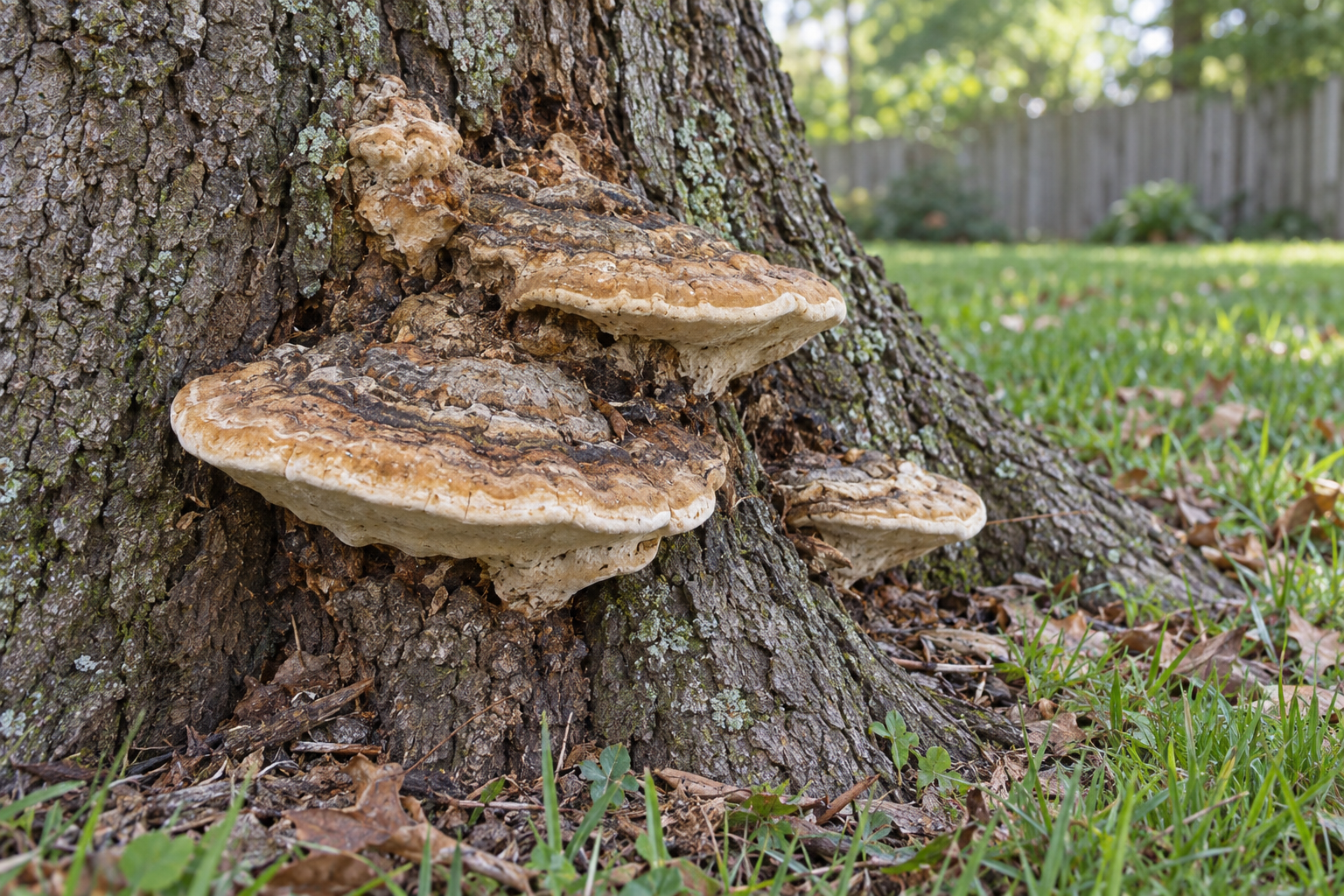
Fungus at the base. Shelf-like growths on the trunk or at the root flare usually mean decay inside the wood.
Cracks and splits. A seam opening in the trunk or down through a fork is wood that is already giving way.
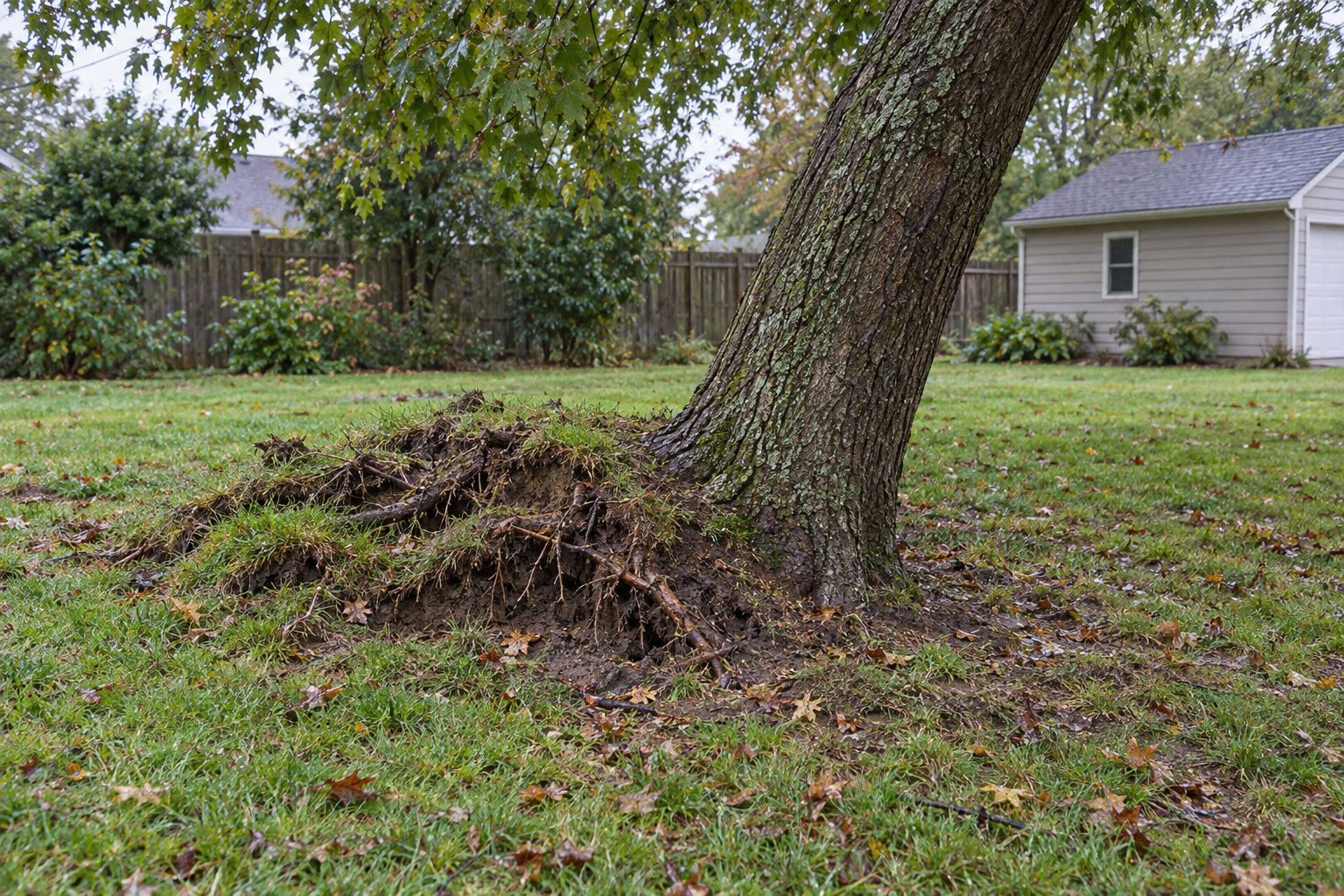
A new lean. A tree that leans more than it did, with "root lifting" on the far side, needs looking at right away.
Lightning damage. A strip of bark blown off down the trunk. Lightning can kill a tree outright, and a tree it kills has to come down before it falls on a house or a business.
If you see one of these on a tree in your yard, call us before the next storm does the deciding.
What a check and the work cost
No two trees are priced alike, so we quote the whole job after we have seen yours, not over the phone.
The price is set by the size of the tree, what sits under it, how we get to it, and whether it can be pruned or has to come down in sections. Work done on a day we choose also costs less than the same tree after a storm breaks it, which is the best reason to have a worrying tree looked at now.
We quote the whole job before we start, with no surprise charges after.
Trim, Treat or Take Down
Every check ends in a plain recommendation: prune out the problem, treat and watch the tree, or take it down. You decide what happens next, and the quote covers the whole job.
When a tree is stressed but not failing, it gets a plan: deep water in a dry summer, mulch pulled back off the trunk, and the signs to watch for. The Missouri Department of Conservation: Tree Care pages are a good companion. Call us back if anything changes.
Remove it
When decay, a split trunk or lightning damage means the tree is likely to fail, it comes down in sections with "controlled rigging", roped down past the roof and the fence rather than dropped, and the wood is hauled off.
You callTell us which tree and what you have noticed. We answer or call back the same working day.
We walk the treeRoots, trunk, unions and crown, and what sits underneath it, on the day we said we would come.
We tell you what we seeA plain answer in your yard: prune it, treat and watch it, or take it down.
You get the whole priceOne quote for the work, free and with no obligation, before anything is cut.
The work and the cleanupIf you go ahead, we set the day, do the work and clean up when it is done.
What neighbors say
Google reviews
Peyton and his crew were amazing to work with. They removed a very large tree from my backyard that was near houses. They got it out safely and fast. Would definitely hire him again!!
Jacob EshlemanGoogle review
Peyton responded to bid request very quickly and completed work as promised. I would use his services again and high recommend him for any tree service and stump removal.
Tim AkersGoogle review
Peyton and Nick are hard working individuals who get the job done right. Besides working for us I have seen many jobs they have been completed and everything is top notch. Would highly recommend their services!!!!!
larry BakerGoogle review
When a Written Risk Report Is Needed
Most worried owners need a look and a straight answer, not paperwork. When an insurer, the city or a dispute with a neighbor turns on a tree, though, they may ask for a written assessment from a credentialed arborist, such as one who is "Tree Risk Assessment Qualified".
Tree services that evaluate storm-damaged trees cite that credential and Board Certified Master Arborist for this kind of work. Tell us on the call who is asking for a report and why, and we will tell you straight whether our check covers it or you need that paper from a credentialed arborist.
Homes and Commercial Properties
We check trees on residential and commercial properties alike. A tree over a shop roof, a parking lot or a sidewalk is walked from roots to crown and judged by what it would hit, the same as one in a back yard.
The commercial work we take on is the same list of services we do for homes. Call and tell us about the property, and we will say on the phone whether it is a job we take, then come out and quote it.
Have the tree looked at before it decides for you
Call and tell us which tree is bothering you. We come out, walk it from the roots to the crown and quote any work it needs for free.